Claude Opus 4.7 Benchmarks: What Actually Changed in 2026
Claude Opus 4.7 Benchmarks: What Actually Changed in 2026
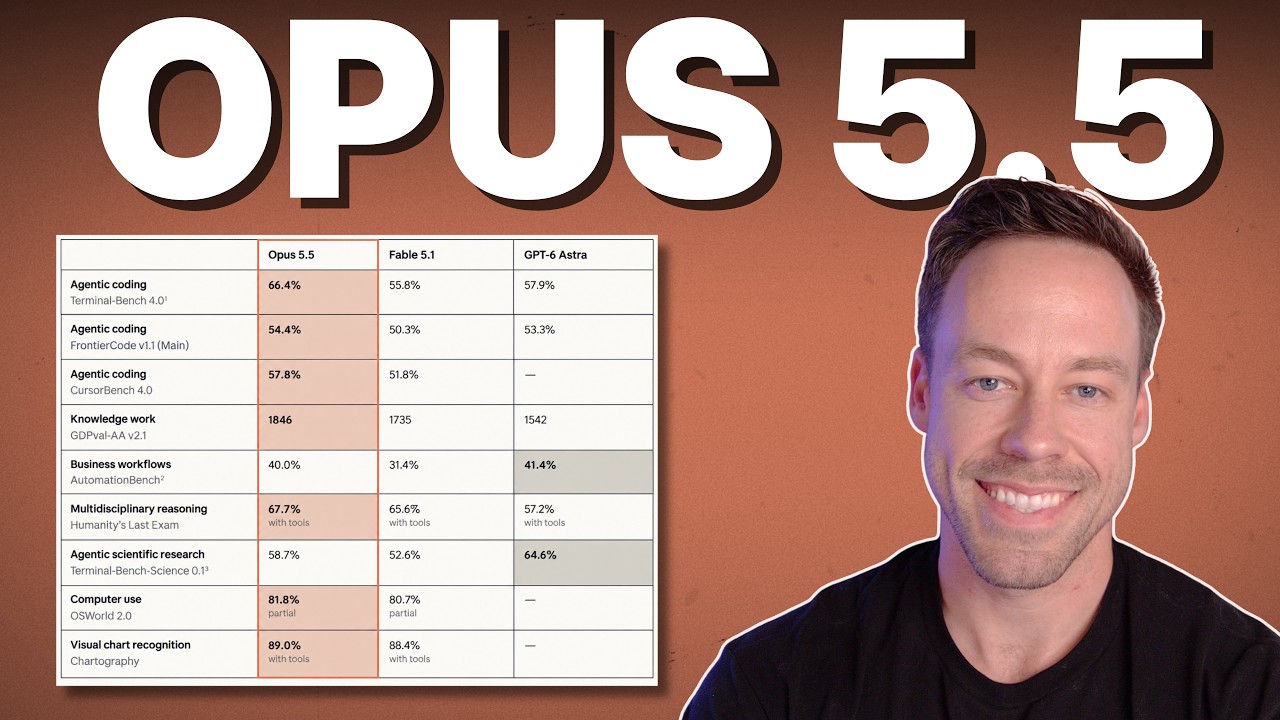
Anthropic just released Claude Opus 4.7, and by the numbers, this is a massive upgrade. Coding benchmarks jumped double-digits across SWE-Bench Pro, SWE-Bench Verified, and Terminal Bench 2.0. Vision resolution tripled on the API. Document reasoning went from 57.1 to 80.6. If you use Claude Code daily, this is the version you want on — but there are some tradeoffs in token usage and defaults that you need to understand before you flip the switch.
I've already been running 4.7 in Claude Code for my own work, and I want to walk through the benchmark deltas that actually matter, the new effort controls (including the new X high level), and a few configuration notes that will save you from burning through your usage cap on day one.
How Much Better Is Claude Opus 4.7 at Coding?
The short answer: meaningfully better across every major coding benchmark Anthropic ships in its model card.
Looking at 4.7 versus 4.6 on the three benchmarks most people actually care about:
- SWE-Bench Pro: 53 to 64
- SWE-Bench Verified: 80 to 87
- Terminal Bench 2.0: 65 to 69
Those are not small bumps. A 10+ point jump on SWE-Bench Pro is the kind of delta you feel inside a multi-step agentic task — fewer broken tool calls, less getting lost in large codebases, and cleaner PRs when you let it run on a branch. If you've been on the fence about whether Opus upgrades are cosmetic, this one isn't.
The only spots Opus 4.7 doesn't sit on top are agentic search and graduate-level reasoning, where GPT-5.4 still leads. Interestingly, 4.7 actually dropped a bit versus 4.6 on agentic search (89.3 vs a slightly higher 4.6 number), which is the kind of honesty you rarely see on a launch page. When a lab publishes a benchmark where their own new model went down, it usually means the rest of the chart is real data, not marketing.
What Changed in Claude Opus 4.7's Vision and Document Reasoning?
This is where the upgrade gets interesting if you work with PDFs, diagrams, or screenshots.
Anthropic tripled the input image resolution on 4.7 API calls. That's huge if you push small-text screenshots, architecture diagrams, or scanned documents into Claude. Benchmark-wise, visual reasoning jumped from 69 to 82, and document reasoning went from 57.1 to 80.6.
Document reasoning at 80 is genuinely useful. If you're someone who feeds Claude PDFs all day, who runs a co-work setup where the agent is reading contracts, statements, or internal reports, this is the single biggest quality-of-life upgrade in the release. I've tested this with a few long PDFs I was struggling to get clean extractions from on 4.6, and the 4.7 output landed closer to something I'd ship without hand-editing.
There's also a separate multimodal coding benchmark — coding tasks that include screenshots and visual context in the prompt — where 4.7 made a clear jump. That one ties directly to the resolution change. When the model can actually read a Figma export at full detail, it stops hallucinating spacing and typography.
How Much Does Long-Context Reasoning Improve in Opus 4.7?
Long-context went from 71 to 75 on Anthropic's benchmark. It's an improvement, not a transformation.
Here's the thing: the jump is nice, but it does not change how you should manage your sessions. Context rot is still real. I still recommend clearing at 20% to 25% of the context window, not hanging on to the same session for hours because you don't want to lose state. 4.7 does not make sloppy session management okay — it just makes good session management slightly more forgiving.
If you haven't watched me rant about context rot before, the short version is: the more you pile into a single Claude Code session, the worse the output gets per token spent. A 4-point long-context bump doesn't offset a session that's at 85% full. Use explicit memory files, use /clear, and break work into phases.
What Is the X High Effort Level in Claude Code?
Claude Code just added a new effort level called X high that sits between high and max. Claude Code now defaults to X high out of the box when you're on Opus 4.7.
This is Anthropic's direct response to the Opus 4.6 "nerfed" discourse. A few weeks back, Claude Code creator Boris Chernyi confirmed they had moved the default effort level on 4.6 to medium, which is a big part of why people felt the model got worse. The fix is a new tier above high that pushes the model to try harder without flipping the max switch, which would blow through usage caps for most users.
You change it with:
/effort [level]
The trick is knowing your usage ceiling. If you're already hitting limits on 4.6 at medium, moving to X high on 4.7 is going to accelerate that fast. Which leads directly into the next section.
Does Opus 4.7 Use More Tokens Than 4.6?
Yes. Anthropic explicitly says Opus 4.7 uses 1.0x to 1.35x more input tokens than 4.6 depending on content type. They also note the model thinks more at higher effort levels — and the default is now X high, not medium.
Two things to know if you care about usage limits:
- The tokenizer changed. 4.7 uses an updated tokenizer that processes text differently, and the net effect is more tokens for the same input. That's 1.00 to 1.35 times more — not a huge spread on the low end, but a real cost on the high end.
- The default effort level is much higher. If you were on 4.6 at
mediumand you never changed it, you'll feel the difference immediately. Higher effort means more thinking tokens per response.
If you've been bumping against usage caps on 4.6, adopt 4.7 with intention. Either drop the effort level manually, be more aggressive about clearing context, or plan to spend more. Anthropic also removed extended thinking as a separate toggle in this release — it's rolled into the new effort system.
What Else Shipped With Claude Opus 4.7?
A few smaller but useful updates in the release:
/ultra-reviewcommand. A dedicated review session with its own context, so you can spin up code review without polluting your main build session. This is a nice mirror to how superpowers handles review.- Auto mode extended. For anyone who doesn't know, auto mode is essentially an alternative to
--dangerously-skip-permissions. It just gets out of your way without requiring the nuclear option. - Higher-resolution image inputs on the API. Same 3x resolution bump mentioned earlier, now available via API, not just the app.
- Extended thinking removed as a separate feature. Don't panic — it's rolled into the new effort control tiers.
Anthropic also published a full migration guide in their docs covering tokenizer changes, effort defaults, and behavior diffs. If you have production workloads running on 4.6, read that before you bump the model ID. There are enough subtle changes that a straight swap without reviewing defaults will surprise you.
Should You Upgrade to Claude Opus 4.7?
For most Claude Code users, yes — but with configuration awareness, not blindly.
Upgrade if: you spend most of your time in coding tasks (the SWE-Bench jump is real), you process documents or images, or you're hitting quality ceilings on 4.6. The output is meaningfully better.
Hold off or configure carefully if: you're already hitting usage limits, you haven't thought about your effort level in months, or you have production automation where token cost scales badly. The 1.35x token multiplier plus higher default effort is a real combination. Tune it before you ship it.
Frequently Asked Questions
Is Claude Opus 4.7 better than GPT-5.4?
It depends on the task. Opus 4.7 leads on most coding benchmarks (SWE-Bench Pro, Verified, Terminal Bench) and visual reasoning. GPT-5.4 still leads on agentic search and graduate-level reasoning. For coding agents like Claude Code, 4.7 is the stronger pick today.
How do I change the effort level in Claude Code?
Use the /effort command followed by the level you want — low, medium, high, X high, or max. Claude Code on Opus 4.7 defaults to X high, so most users will want to leave it alone unless they're watching usage costs.
Does Claude Opus 4.7 support longer images?
Yes. The API now supports 3x the image resolution of 4.6, which means you can send detailed diagrams, small-text screenshots, and high-res document scans without downsampling. Visual reasoning and multimodal coding benchmarks both jumped as a direct result.
Is extended thinking still available in Opus 4.7?
Extended thinking as a separate toggle was removed. It's now rolled into the effort control tiers. Higher effort levels (like X high and max) give you the longer-reasoning behavior you used to get from extended thinking.
Will Opus 4.7 burn through my usage limit faster?
Probably, yes. Anthropic confirms the updated tokenizer uses 1.0x to 1.35x more tokens than 4.6 on the input side, and the new default effort level is higher. If you were already close to your cap on 4.6, expect to hit it sooner on 4.7 unless you lower the effort level or clear context more aggressively.
If you want to go deeper into getting the most out of Claude Opus 4.7 and Claude Code, join the free Chase AI community for templates, prompts, and live breakdowns. And if you're serious about building with AI, check out the paid community, Chase AI+, for hands-on guidance on how to make money with AI.