Sonnet 4.6 vs Opus 4.6: Which AI Model Should You Actually Use?
Anthropic just released Sonnet 4.6, and the benchmarks are surprisingly aggressive. The short answer is that Sonnet 4.6 is now beating the larger, more expensive Opus 4.6 in specific areas like financial analysis and office tasks, all while coming in at a 40% cheaper price point.
If you are blindly deploying Opus because you think "bigger is better," you are wasting money. I’ve dug through the documentation and ran the numbers. Here is exactly how this new model stacks up and where you should actually be deploying it in your workflows.
Does the 1 Million Token Context Window Actually Work?
The headline feature for Sonnet 4.6 is the new 1 million token context window. On paper, this sounds great. It means you can stuff entire codebases or massive documentation sets into a single prompt.
However, here is the thing: Context Rot is real.
If you have been following my work, you know that effectiveness usually drops off a cliff once you hit about 100,000 to 150,000 tokens. The model starts forgetting instructions or hallucinating details from the middle of the context window.
Anthropic claims they fixed this. They state the new window allows the model to "reason effectively across all context," and they cite their "Vending Bench" evaluation—a simulated business simulation—as proof that the model stays coherent over time.
I would take that with a grain of salt.
Until I see third-party evidence that they have solved the degradation issue at 800k+ tokens, do not assume you can fill that 1 million window without performance penalties. Bigger isn't always better if the retrieval accuracy tanks.
How Do Sonnet 4.6 Benchmarks Compare to Opus?
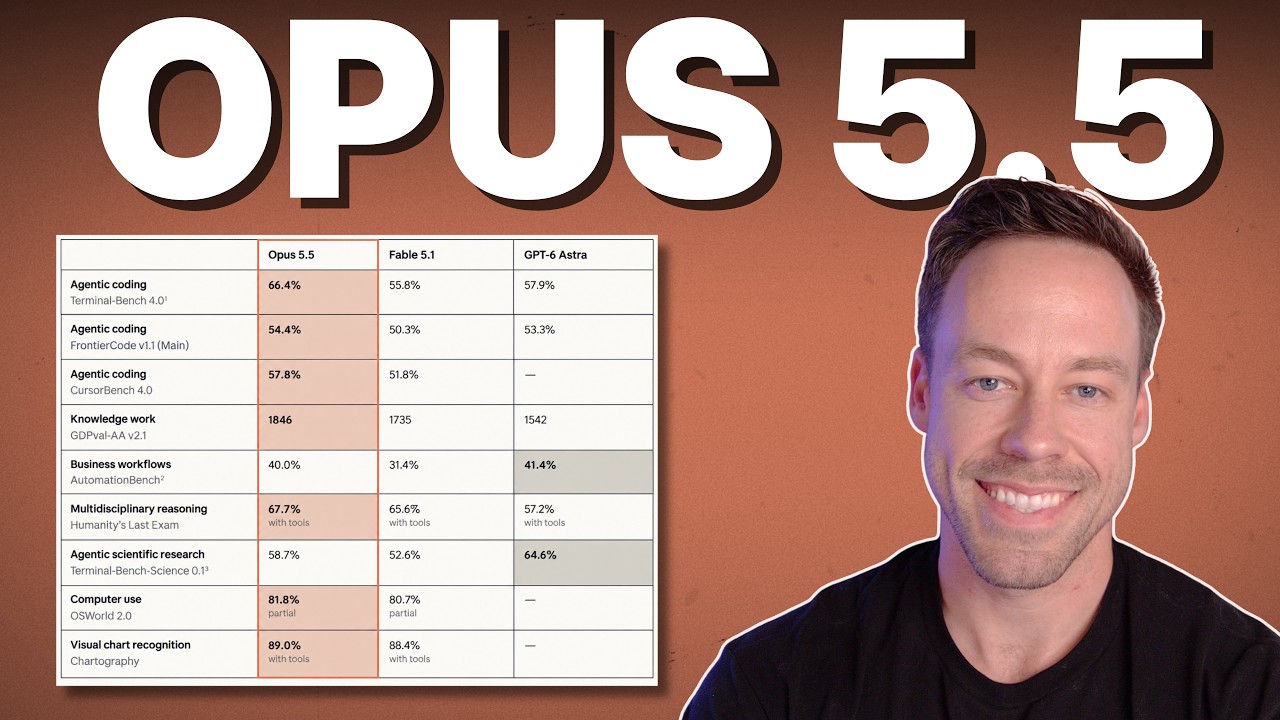
Let's look at the hard data. When you compare Sonnet 4.6 to the previous Sonnet 4.5, it is a massive leap forward. It crushes the old version on virtually every test.
But this is where it gets interesting: Sonnet 4.6 beats Opus 4.6 in two critical categories.
- Agentic Financial Analysis
- Office Tasks
This isn't an accident. Anthropic is pushing "Claude Co-work" heavily right now. They want this model to be the engine behind computer use—executing tasks in Excel, managing email, and browsing the web. These are practical, everyday use cases for the average worker, not just hardcore engineers.
If you are building agents that need to navigate a GUI or handle spreadsheets, Sonnet 4.6 is currently your best option, regardless of price.
Is Sonnet 4.6 Good for Coding?
For technical tasks, Sonnet 4.6 holds its own, but it doesn't strictly replace Opus.
In Agentic Terminal Coding, Sonnet 4.6 is roughly equivalent to Opus 4.5. It also performs well against competitors like Gemini 3 Pro and 5.2.
However, if you are doing deep, novel problem solving, Opus is still king. The data shows that Opus leads in:
- Agentic Search
- Novel Problem Solving
- Complex Terminal Coding
Sonnet takes the lead in scaled tool use. This distinction is critical for developers deciding which API to call.
When Should You Use Sonnet 4.6 vs Opus 4.6?
Unless you are on the Claude Max plan paying $200/month where you can spam Opus without consequence, you need to be cost-conscious. Since Sonnet 4.6 is 40% cheaper than Opus, you need a decision matrix.
Here is how I break it down:
Use Opus 4.6 (The Nuclear Option)
Opus remains the strongest option for tasks that demand the deepest reasoning. Use it for:
- Codebase refactoring
- Coordinating multiple agents in a complex workflow
- Novel problems where accuracy is paramount and you cannot afford a second try
Think of Opus as the nuclear bomb. You use it when you absolutely need to obliterate a difficult problem.
Use Sonnet 4.6 (The Scalpel)
We finally have a scalpel that is sharp enough to do real work. Use Sonnet for:
- Everyday mundane tasks (email, scheduling)
- High-volume tool use
- Financial analysis
- Workflows where cost is a primary factor
Why Is Anthropic Pushing This Model?
If you are deep in the AI bubble, you might think everyone needs Opus-level reasoning for everything. But Anthropic is looking at the enterprise market.
Most enterprise users aren't refactoring legacy kernels; they are trying to automate Excel workflows and manage inboxes. By optimizing Sonnet 4.6 for "Office Tasks" and making it the default on the Claude web app, Anthropic is targeting the "enterprise light" space aggressively.
For developers, this is great news. We now have a model that handles tool use better than the flagship model for nearly half the price.
Frequently Asked Questions
What is the price difference between Sonnet 4.6 and Opus 4.6?
Sonnet 4.6 is approximately 40% cheaper than Opus 4.6. The pricing structure follows Anthropic's standard tiering, making Sonnet the more scalable option for high-volume applications.
Does the 1 million token context window eliminate context rot?
Anthropic claims it does, citing their Vending Bench tests. However, practically speaking, most models see performance degradation after 100,000 to 150,000 tokens. Treat the 1 million limit with caution until you verify it with your own data.
Is Sonnet 4.6 better at coding than Opus 4.6?
Not for complex tasks. Opus 4.6 still wins on novel problem solving and complex refactoring. However, Sonnet 4.6 is excellent at scaled tool use and standard coding tasks, offering a much better price-to-performance ratio for routine engineering work.
If you want to master AI automation and keep up with these changes, check out the Chase AI Skool Community where we build these systems live.